Understanding Melanotan I and Melanotan II Peptides
Melanotan I (also known as Afamelanotide) and Melanotan II are synthetic peptides designed to mimic the activity of α-MSH. α-MSH naturally regulates melanogenesis, the process by which melanocytes produce melanin in response to UV exposure. By activating melanocortin receptors, these peptides increase melanin synthesis, leading to enhanced skin pigmentation without the need for prolonged sun exposure.
Melanotan I (Afamelanotide): A synthetic analog with improved potency and stability, Melanotan I was developed primarily as a photoprotective agent for patients prone to photosensitive disorders such as erythropoietic protoporphyria (EPP). It has been approved in some countries for this indication.
Melanotan II: This peptide was designed to have broader effects beyond pigmentation, including stimulating libido and sexual arousal, as well as inducing tanning. It remains unapproved by major regulatory bodies but is often marketed for cosmetic and recreational use.
Chemical Structure and Mechanism of Action
Both Melanotan peptides are derivatives of the α-MSH tridecapeptide but differ in amino acid sequence and molecular modifications to increase their stability and receptor affinity.
Structure Highlights:
Melanotan I is a linear peptide with modifications to resist enzymatic degradation.
Melanotan II is a cyclic peptide, enhancing its binding to melanocortin receptors and increasing bioavailability.
These peptides primarily bind to the melanocortin 1 receptor (MC1R) on melanocytes, triggering a signaling cascade that upregulates melanin production. Melanotan II additionally interacts with other melanocortin receptors (such as MC3R and MC4R), which explains its effects on appetite and sexual function.
Melanotan 1 vs Melanotan 2: A Comparative Overview
To understand the distinctions and overlaps between Melanotan 1 and Melanotan 2, it helps to examine their effects side by side.
Fat Metabolism: Evidence suggests a role in fat burning and metabolic regulation.
Cognitive Function: Emerging research indicates potential benefits in neuroprotection and cognition.
Blood Pressure & Vascular Health: May contribute to cardiovascular benefits by influencing vascular tone.
Neuroinflammatory Diseases: Investigated for potential therapeutic roles in inflammation-related neurological disorders.
Melanotan 2
Sexual Function: Notably affects sexual arousal and erectile function through melanocortin receptors beyond MC1R.
Skin Pigmentation: Also stimulates melanin synthesis, but with additional systemic effects.
Impulse Control & Addiction: Shows promise in modulating behavior related to impulse and addictive patterns.
Hunger and Satiety: Regulates appetite and energy balance, impacting hunger and fullness sensations.
Autism Spectrum Disorder: Early-stage studies explore effects on behaviors linked to autism spectrum conditions.
While both peptides influence skin pigmentation and aspects of metabolism and the central nervous system, Melanotan 1 tends to have a more targeted effect on melanogenesis and vascular health, making it suitable for therapeutic use in conditions like photosensitivity. In contrast, Melanotan 2 engages a broader spectrum of melanocortin receptors, leading to diverse physiological effects that extend into sexual health, behavior modulation, and appetite regulation.
BPC-157 Peptide for Tissue Healing and Regeneration in Research
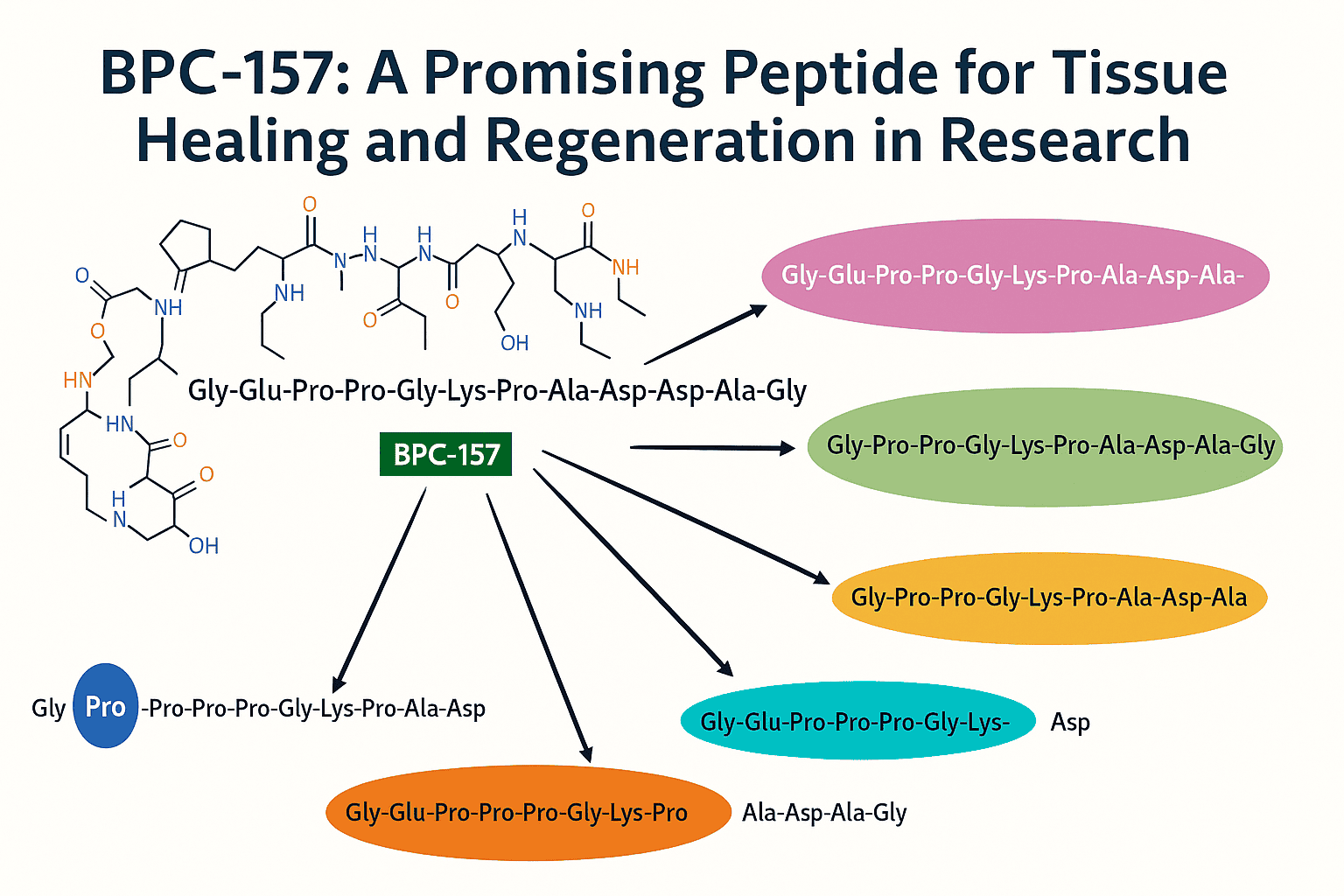
BPC-157, known as the “Body Protection Compound,” is a synthetic peptide that’s been gaining serious traction in the research community — and for good reason. Originally derived from a protein found in human gastric juice, BPC-157 has shown impressive results in animal studies related to tissue healing, inflammation reduction, and even organ protection.
What makes BPC-157 particularly intriguing is its broad range of biological effects observed in preclinical models. Research involving rodents and canines has highlighted its ability to support muscle, tendon, and nerve repair, protect internal organs, and modulate the body’s inflammatory response. Though promising, it’s important to note that BPC-157 is not approved for human use and is intended strictly for laboratory research.
In this blog, we’ll explore:
What BPC-157 is and how it works
Key research findings and potential benefits
Important considerations for responsible research use
What Is BPC-157?
BPC-157 is a fragment of a protein found in the human stomach, believed to play a role in maintaining gastrointestinal integrity. Scientists developed the synthetic version to study its potential protective and healing effects throughout the body—not just the digestive tract.
What’s unique about BPC-157 is its ability to remain stable in gastric environments, which allows it to exert systemic effects even after oral administration (unlike many other peptides). It interacts with various growth factors and cellular pathways that support:
Angiogenesis (formation of new blood vessels)
Collagen production
Tissue repair and remodeling
Anti-inflammatory signaling
What the Research Says
Though human studies are limited, there’s a growing body of animal-based research suggesting wide-ranging therapeutic potential for BPC-157.
1. Muscle, Tendon, and Ligament Healing
In studies with rodents, BPC-157 has shown to accelerate muscle regeneration and aid in the repair of torn tendons and ligaments. It appears to promote:
Increased fibroblast activity
Faster collagen organization
Reduced healing time following injury
2. Gastrointestinal Protection
BPC-157 was first explored for its role in gut protection, showing potential to help heal:
Ulcers
Intestinal inflammation
Gastrointestinal lesions from NSAIDs or alcohol
3. Neuroprotection and CNS Repair
Preclinical trials suggest BPC-157 may help protect the brain and nerves from damage. Some studies show improved healing in models of:
Spinal cord injury
Traumatic brain injury
Peripheral nerve damage
4. Anti-Inflammatory Properties
BPC-157 appears to downregulate pro-inflammatory cytokines while promoting tissue regeneration. This dual action makes it a potential agent for research in autoimmune or inflammatory diseases.
5. Cancer Cachexia
Emerging studies suggest BPC-157 may help counteract Cancer cachexia—a muscle-wasting condition often associated with cancer. While more research is needed, early rodent models have shown promising results in maintaining lean body mass and improving energy metabolism.
Important Considerations
❌ Not for Human Use
BPC-157 is sold for research purposes only. It is not approved by the FDA or other regulatory bodies for human or veterinary use. It should not be consumed, injected, or used outside of qualified laboratory settings.
🏋️ Athletes Beware
The U.S. Anti-Doping Agency (USADA) has issued warnings against the use of BPC-157 in professional sports. It is on the World Anti-Doping Agency (WADA) prohibited list due to unapproved status and unknown safety.
🧪 More Research Needed
Although animal studies are encouraging, there are no well-controlled human clinical trials. Claims regarding benefits or applications should remain within the scope of scientific investigation and regulatory compliance.
BPC-157 is an exciting peptide under active research for its regenerative, anti-inflammatory, and protective effects in various tissues. While much of the data comes from animal studies, the early results have positioned it as a strong candidate for further exploration in fields such as:
Sports medicine
Gastroenterology
Neurology
Oncology
Researchers seeking to study healing and recovery mechanisms may find BPC-157 research peptide at NextechLabs.
Stay updated and save with our newsletter!
Stay in the loop with the newest additions to our peptide collection and enjoy special savings as part of our valued community.
Any peptides on our website are sold for research and laboratory use. The products should not be used in form of cosmetic, food additive, chemical, drugs, or other applications not classified in this document. The listing of a material on this site does not constitute a license to its use in infringement of any patent. All customers represent and warrant that through their own review and study that they are fully aware and knowledgeable about the following: Government regulations regarding the use of and exposure to all products. The health and safety hazards associated with the handling of the products they purchase. The necessity of adequately warning of the health and safety hazards associated with any products. The company holds its right to cancel any purchase done if there is any proof or the company sees that you are buying for use other than it is sold for.
“NextechLabs' products are intended solely for laboratory research purposes and are not to be used for any other purposes, including but not limited to vitro diagnostic purpose, in food drugs, medical devices, or cosmetics for humans or animals or for commercial purposes. The purchaser agrees that the products have not been sterilized or tested by “NextechLabs” for safety and efficacy in food, drug, medical device, cosmetic, commercial or any other use.
The purchaser expressly represents and warrants to “NextechLabs” that the purchaser will properly test, use, manufacture and market any products purchased from “NextechLabs” and/or materials produced with products purchased from “NextechLabs” in accordance with the practices of a reliable person who is experienced in the field and in strict compliance with all applicable laws and regulations, now and hereinafter enacted.